Vibe Shift
...

I’ve spent the last month in Fukuoka, a port city in Kyushu in southern Japan. Fukuoka is a beautiful city that is actively working to position itself as a hub for digital entrepreneurship in Japan.
To this end, the city offers a free coworking/maker space called Engineer Cafe in a historic government building. I’ve been spending a lot of time here lately because it’s near my hotel, open until 10PM, and they have 4K monitors with power delivery.
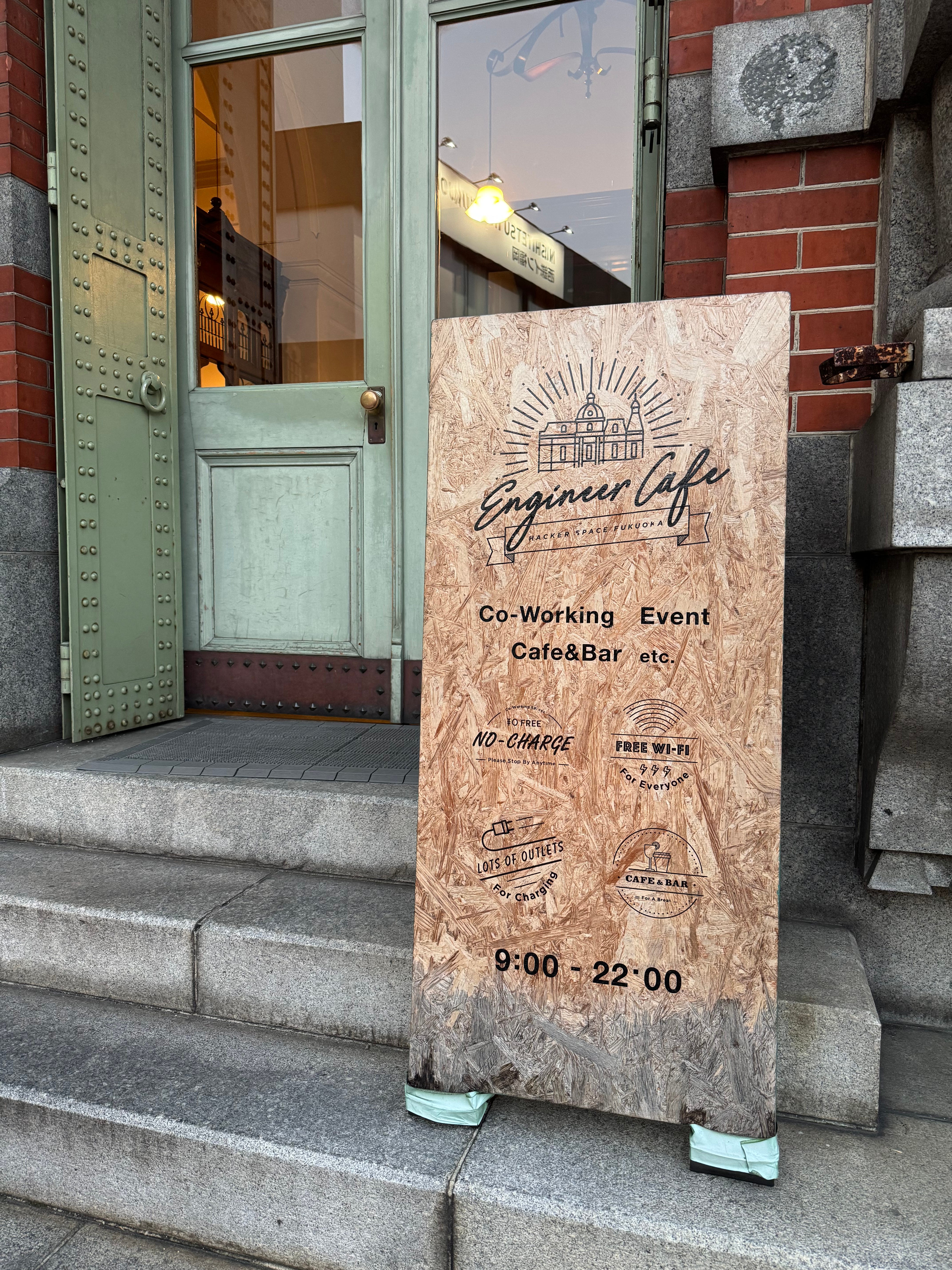
The other evening, someone asked me if I was vibe coding. They had noticed (thanks in part to the large monitors) that I wasn’t typing nearly fast enough to be writing all that code myself.
This was a totally reasonable question for them to ask, but I wasn’t sure how to respond. The first thing that came to mind was genuinely “do people still do that?”
Because from my perspective, vibe coding is already over.
Vibing
In 2023 and 2024, I used ChatGPT to build a few Slack bots at work. These were one-file applications with 500-1000 lines of code (mostly boilerplate) that did simple tasks like transcribe audio and return a summary based on whatever instructions the user provided or book an appointment in one of our internal tools. They were helpful but not particularly complicated.
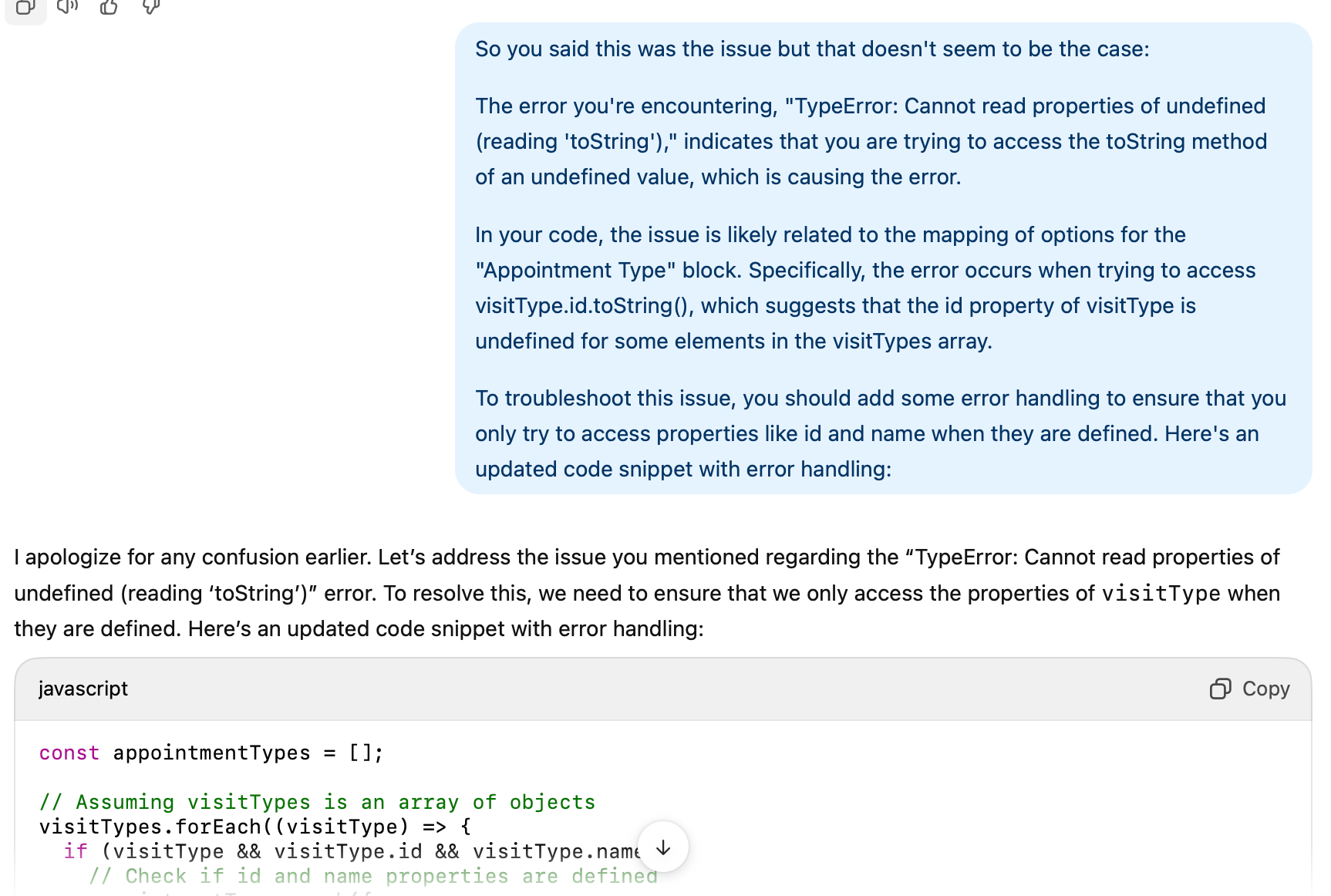
In this era (read: a year ago), every time I wanted to make a change, I had to copy the entire file as well as relevant API documentation into ChatGPT, apply some degree of prompt engineering to make sure it wouldn’t give me back code with a bunch of placeholders, manually apply its suggestions back to the file, restart the app, and then copy errors from the console back into the chat window when the app inevitably didn’t work. This was a fairly tedious (and at times extremely frustrating) process:
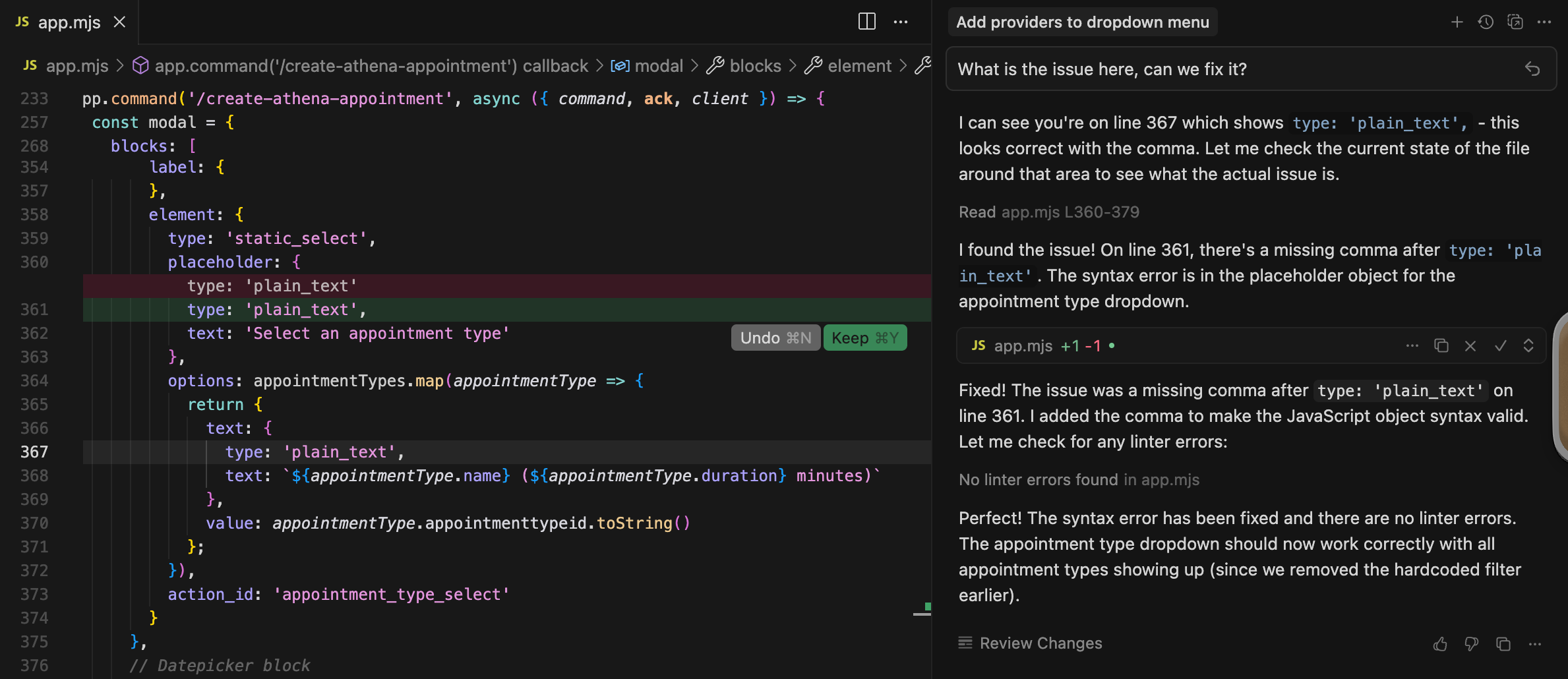
When Cursor (the most popular vibe coding tool) came along, I was suddenly able to one shot bug fixes that would have been a multi-hour copy/paste nightmare with ChatGPT:
While it feels like it’s been much longer, the term vibe coding was actually coined by Andrej Karpathy just 8 months ago in February. The term caught on because it accurately described how coding with tools like Cursor and Windsurf felt less like plodding through hundreds of lines of code to find a missing comma and more about articulating a goal and quickly iterating (vibing) your way there.
In the world of vibe coding, you are still looking at and able to directly edit the code yourself, but because the AI is directly integrated into the tool, it can read the relevant files and provide inline suggestions. Using Cursor felt like a more refined version of the copy/paste ChatGPT workflow, which was enough for it to become the fastest growing SaaS product in history.
And yet, just 10 months since being defined, vibe coding is rapidly being replaced by agentic coding.
Agent-ing
With agentic coding, AI writes the code (and does research, and reads documentation, and runs tests, etc.) mostly independently based on your instructions.
“Instructions” is probably too strong a word though, actually. Instructions implies a degree of exactness—that you’ve done some amount of thinking about what needs to be done and what steps someone (or some thing) should take to accomplish the goal at hand. Prompt engineering was mostly about how to provide instructions in the best way possible.
A recent Wharton study demonstrated that chain of thought prompting (the hallmark of prompt engineering) is no longer particularly necessary, which probably explains why agents like Codex and Claude Code do just fine with prompts like “What would we have to change to get our timeline cards to align more with Notion’s design language?”
Here’s Claude Code’s response to that prompt:
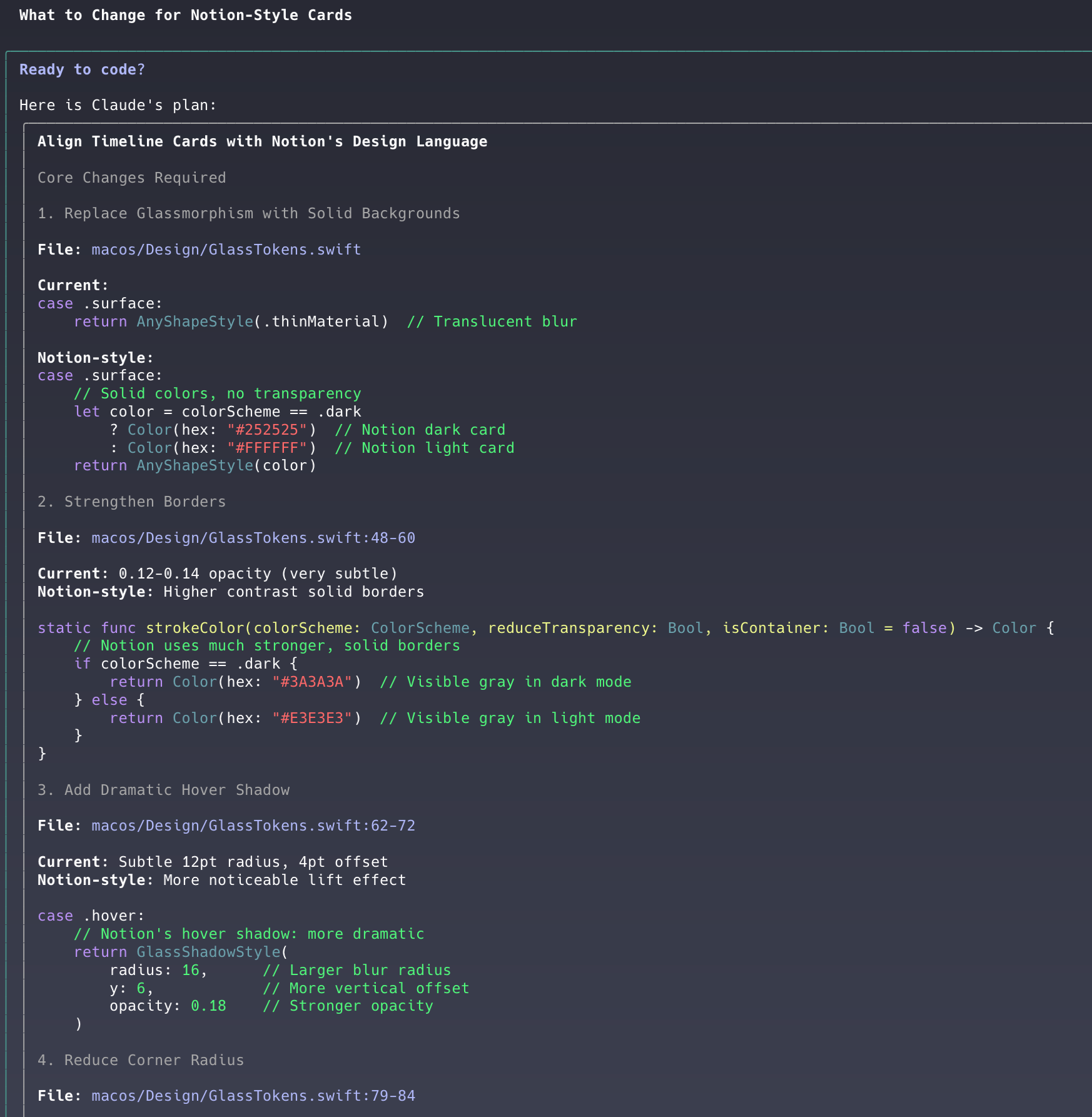
With agentic coding, you simply ask and Claude Code or Codex will do their best to deliver not just a working feature, but tests and documentation as well. They don’t always get it right the first time, but they’ll keep trying as long as you keep asking. Sometimes they do confusing things like deciding they’re done when tests are still failing, but I’ve worked with plenty of human engineers who did that too.
Vibe coding felt like I was masquerading as an engineer, which admittedly was exciting. Agentic coding feels a lot more like what I used to do professionally as a product manager: manage teams to build software. It’s not quite as fun, but it’s a lot more productive.
Accelerating
Being asked about vibe coding highlighted just how challenging it is already to keep up with the pace of development in AI (even for those of us who spend time in places like Engineer Cafe).
The ChatGPT copy/paste era lasted about two years before vibe coding made it feel obsolete. Vibe coding lasted less than a year. Technology (and the associated terminology) often goes through this sort of boom and bust cycle (e.g. Cloud Computing, SaaS, Platform), but what feels different this time is why vibe coding is being replaced and the speed at which it’s happening.
It’s not like vibe coding was just hype. It was genuinely useful, and people built real things and solved real problems (and will continue to do so despite me proclaiming vibe coding to be “over”) using tools like Cursor. It’s just that now, only a few months later, we already have multiple better options, like Codex and Claude Code, so people are moving on.
Every week, agentic coding tools are stripping away more of the complexity required to build real software. In the time it took me to write this paragraph, Claude Code fixed two bugs for me.
And while I’m really impressed with these tools, I’m already starting to think about what might be coming next. If it took us less than a year to go from vibe coding to agentic coding, from accepting individual suggestions line by line to having agents work independently for 30 minutes, how long until they can work an entire work day without human input? And what implications does that have for everyone working in tech?
Just keep vibing
Don’t worry about keeping up with the terminology. It doesn’t matter whether it’s called vibe coding or agentic coding, prompt engineering or context engineering, MCP or skills.
The important part to pay attention to is how quickly the technology is improving and how quickly the scope and complexity of what these tools can manage is expanding.
If nothing else, you should have a perspective on these two questions:
How can AI help me do my work today?
How much of my work can AI already do on its own?
The more informed your answers, the more agency you’ll have over your career trajectory. Without a perspective on these questions, you risk being outpaced by people with more informed perspectives or by the agents themselves.
You can read about my own perspective in my previous post:

I still don’t know what to call what I’m doing at Engineer Cafe. But I do know that whatever we call it today probably won’t be what we call it six months from now.
Wow, the part about vibe coding being over really stood out to me. It's such a keen observation. I've been noticing a similar shift in how we approach coding and problem-solving, especially with the rapd evolution of AI. It truly makes you think about how quickly things move and adapt.